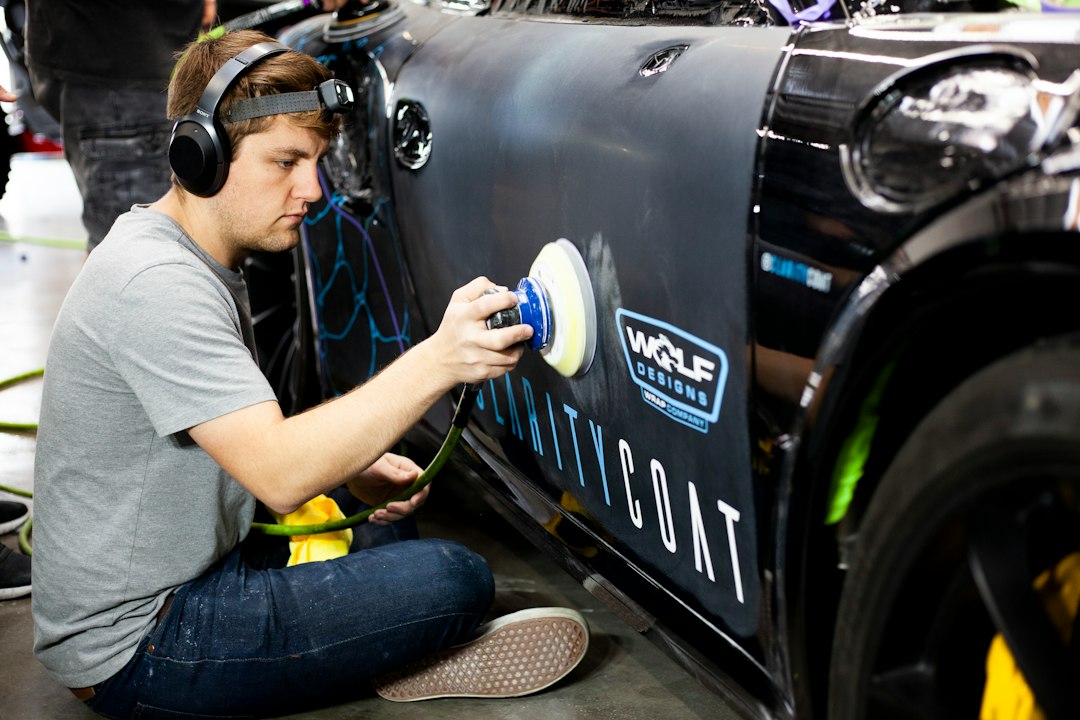
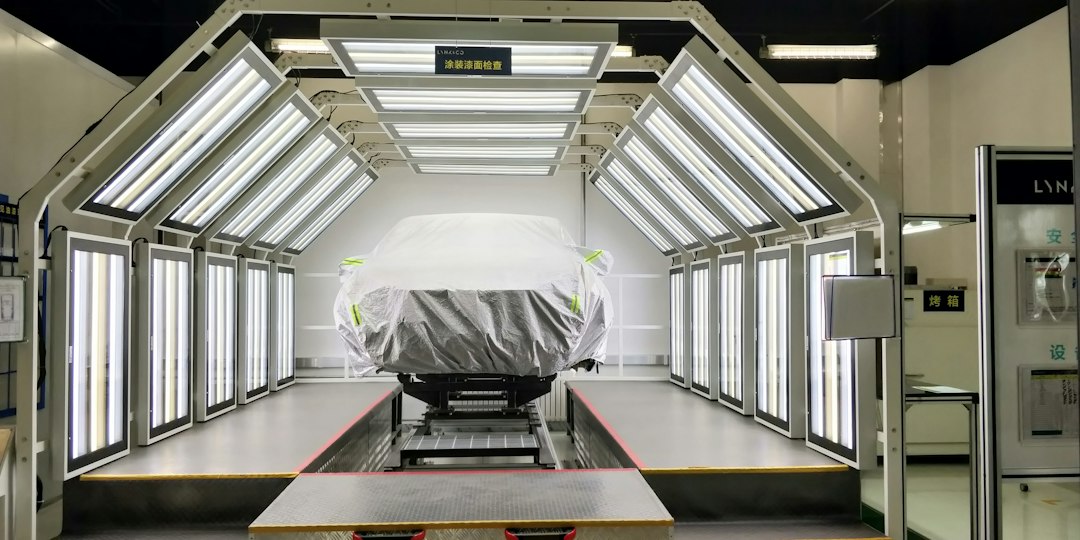
Substrate repair, corrosion protection, surface prep, masking, color formulation, blend strategy, clearcoat, cure, denib and polish all contribute to the finished panel.
Repair metal/plastic and restore appropriate primers/sealers.
02. Prep
Block, sand, clean, mask and prepare transition areas.
03. Color
Mix/adjust formula and apply basecoat with blend strategy as needed.
04. Clear
Apply clear system, cure and protect the repair area.
05. Finish
Denib/polish where needed, inspect texture, gloss and contamination.
WHY ADJACENT PANELS MAY BE INVOLVED
The repair may stop at one panel. The color transition may not.
Metallic, pearl, tri-coat, aged finishes, repair position, panel orientation and color variance can affect blend strategy. A premium site explains that before a customer asks why an undamaged neighboring panel appears on the estimate.
The goal is a visually acceptable match and transition. Formula, variant, spray-out evaluation, adjacent-panel blend strategy and finish condition can all affect the process.
Repair planning should account for primers, seam sealer, cavity protection and other corrosion-restoration steps where procedures and repair locations require them.
PAINT DAMAGE WITHOUT A COLLISION?
Scrapes, key damage, peeling, isolated panel damage and cosmetic refinishing can still use the same photo intake.